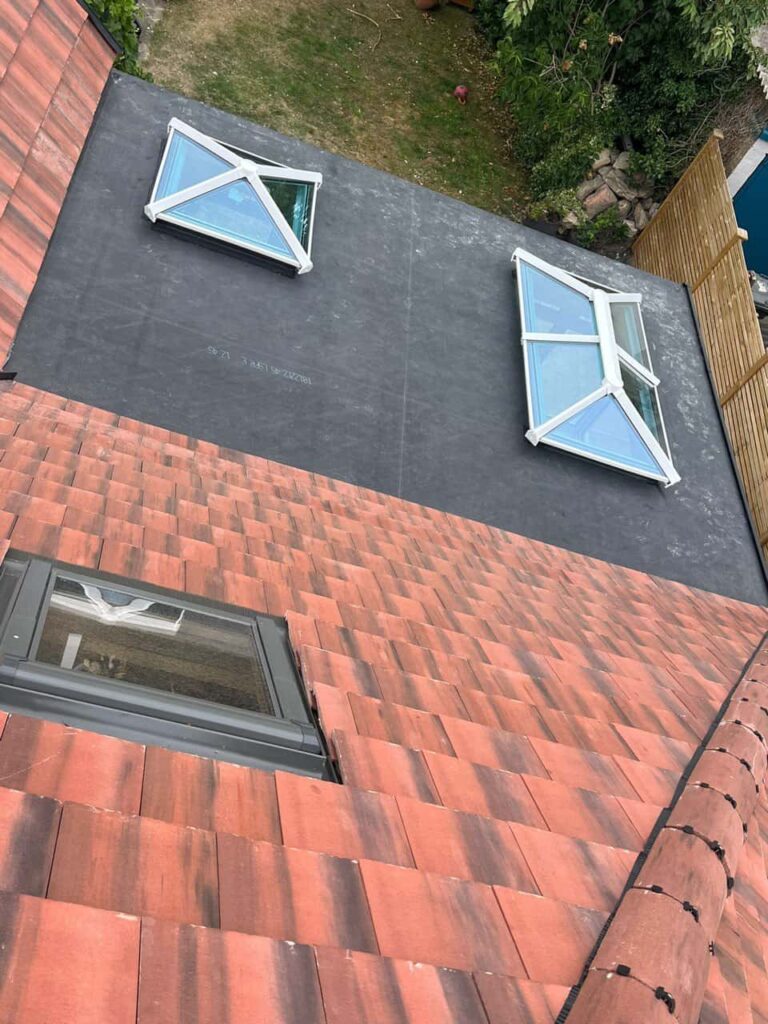
A ceiling stain is often one of the first visible signs that moisture is reaching an area where it should not be. A small mark may initially seem insignificant, but if it continues to expand, darken or reappear after rainfall, it deserves proper investigation. The changing stain can indicate that water is continuing to enter the building or that moisture already present within the roof structure is spreading.
For homeowners in Marlow, Buckinghamshire, the important step is to identify where the moisture is coming from rather than concentrating solely on the appearance of the ceiling. Roof leaks can travel away from their original entry point before becoming visible internally, so finding the true cause requires a careful assessment of both the symptoms and the roof above.
Why Does a Water Stain on the Ceiling Keep Growing?
A ceiling stain becomes larger when moisture continues to reach the affected materials or spreads beyond the area that was originally damp.
Roofing materials, timber and insulation can all influence the path water takes. Once moisture enters through a defect, it may travel along structural components before eventually reaching the ceiling.
This means the edge of the stain does not necessarily show the extent or exact location of the roofing problem.
A growing stain may be associated with:
- Damaged, cracked or displaced roof tiles
- Deteriorated flashing around roof junctions
- Defects around chimneys or other roof penetrations
- Problems around ridge or verge details
- Water entering through damaged sections of the roof covering
- More than one defect contributing to moisture ingress
Finding which of these is responsible is essential if the problem is to be addressed effectively.
Pay Attention to When the Stain Changes
The timing of changes can provide useful clues.
If the stain becomes noticeably darker or larger following rainfall, this strongly suggests that active water ingress should be investigated. If it changes particularly after prolonged rain or wind-driven rain, the weather conditions may also help indicate how water is reaching the roof.
Homeowners may also notice that the stain appears to dry between periods of wet weather before returning again.
This should not be interpreted as the problem having resolved itself. A roof defect can remain present even when no fresh water is entering during dry conditions.
A Dry Ceiling Stain Does Not Always Mean the Leak Has Stopped
One common mistake is assuming that a stain is no longer a concern because it feels dry.
Roof leaks can be intermittent. A particular defect might only allow water through when rain approaches from a certain direction, when rainfall is sufficiently heavy or when surrounding roofing materials become saturated.
As a result, several dry days can make an active problem appear temporarily stable.
If a stain has already increased in size or repeatedly becomes damp, investigating the cause is more useful than waiting to see whether it returns again.
Why the Leak May Not Be Directly Above the Stain
Water does not always travel vertically through a roof.
After entering through a damaged tile, flashing detail or another vulnerable area, it can move along underlay, timbers or other materials. It may then emerge some distance away from the original defect.
This is why simply looking at the section of roof directly above a ceiling stain can sometimes lead to the wrong conclusion.
A professional roof inspection considers likely water paths and examines surrounding roofing details to locate the actual point of entry.
Check Whether the Stain Is Changing Shape
Changes in the shape of a ceiling stain can provide further evidence that moisture is moving.
A stain that develops a wider edge, spreads in a particular direction or begins appearing in neighbouring areas may indicate that water is travelling through surrounding materials.
Multiple stains appearing close together can also suggest that moisture is spreading before reaching the ceiling at different points.
These changes do not necessarily reveal the precise roof defect, but they are useful signs that the issue should not be judged purely by the original mark.
Repeated Staining After Rainfall Suggests an Active Problem
If the same ceiling area repeatedly changes following rain, there is a strong reason to investigate the roof.
The defect itself may still be relatively localised. A displaced tile or deteriorated flashing detail can sometimes allow enough moisture through to create a surprisingly visible internal stain.
The size of the stain therefore does not always correspond directly with the scale of the external defect.
What matters is establishing where water is entering and whether surrounding roofing materials have also been affected.
Why Simply Painting Over the Stain Is Not the Solution
Redecorating can hide discolouration, but it cannot resolve the source of moisture.
If water continues to enter, the stain is likely to return. More importantly, covering the visible mark can make it harder to notice changes that indicate the problem is progressing.
The roofing defect should be identified and addressed first. Once the source has been resolved and affected materials have dried appropriately, the internal finish can then be considered separately.
The priority should always be stopping the cause rather than concealing the symptom.
Small Roofing Defects Can Create Large Internal Stains
A large ceiling mark does not automatically mean that a large section of roof has failed.
Water can spread across absorbent materials, creating staining considerably wider than the original entry point. Conversely, a relatively serious roof defect may initially produce only a small internal mark.
For this reason, the visible size of the stain should not be used by itself to judge the condition of the roof.
A proper inspection can distinguish between a contained defect and a problem affecting a wider section of the roofing system.
Look for Other Signs of Moisture
A growing ceiling stain may not be the only indication that water is entering.
Other changes around the affected area can provide useful information, including:
- Peeling or bubbling decorative finishes
- Changes in the texture of the ceiling
- Dampness around adjoining walls
- Additional marks appearing nearby
- Musty or persistently damp areas
- Staining that becomes darker following rainfall
The presence of several symptoms can help build a clearer picture of how moisture is affecting the property.
Why Waiting for a Ceiling Stain to Become Much Worse Is Unhelpful
Once a ceiling stain is demonstrably increasing in size, there is already evidence that the situation is changing.
Waiting for water to begin dripping into the room is not necessary before arranging an assessment. A roofing problem can be active well before water becomes visibly severe indoors.
Earlier investigation provides an opportunity to identify the source while deterioration may still be concentrated around a particular roof detail.
It can also help prevent moisture from continuing to spread through surrounding materials.
Previous Roof Repairs Should Be Considered
If the roof has been repaired previously near the area associated with the stain, those repairs can provide useful information.
The previous work may still be performing correctly, with the current water ingress originating elsewhere. Alternatively, deterioration may have developed around adjoining roofing materials.
This is another reason why assumptions should be avoided. Inspecting the repaired section together with the surrounding roof provides a more reliable understanding of the current problem.
Professional Leak Detection Focuses on the Cause
Effective roof repair begins with diagnosis.
Rather than simply replacing the first tile that appears damaged, a professional assessment considers the location of the internal staining, roof design, surrounding junctions, condition of the covering and possible routes taken by water.
At LS Roofing Marlow, we approach roof leaks by identifying the underlying cause before determining what repair is appropriate. This helps avoid treating only the visible symptom while leaving the source of the water ingress unresolved.
For properties in Marlow, this can be particularly valuable when a ceiling stain has changed over time but the external defect is not obvious from ground level.
What Should You Do When You Notice the Stain Growing?
The most useful response is to take the change seriously without assuming the worst.
Make a note of when the stain becomes larger or darker and whether this corresponds with particular weather conditions. Avoid disturbing the roof yourself, particularly when the source is unclear.
The next step is to arrange a professional roof assessment. An inspection can establish whether water ingress is active, identify the likely entry point and determine which roofing components require attention.
Once the source has been correctly identified, an appropriate repair can be carried out rather than relying on temporary assumptions about where the water is coming from.
Conclusion
A ceiling stain that keeps getting bigger should be treated as a sign that moisture may still be entering or spreading within the property. Even if the mark occasionally dries out, repeated changes after rainfall can indicate an unresolved roofing defect.
The source may be a relatively contained problem such as a damaged tile or deteriorated flashing, but the location and size of the internal stain alone cannot confirm the cause. Water can travel considerable distances before becoming visible, making careful roof inspection important.
If you have noticed a ceiling stain growing, darkening or repeatedly returning in your property in Marlow, Buckinghamshire, LS Roofing Marlow can assess the roof and identify the source of the problem. Finding the cause early provides the clearest route towards an appropriate, lasting roof repair.
Call us on: 01628 562 896
Click here to find out more about LS Roofing Marlow
Click here to complete our contact form and see how we can help with your roofing needs.