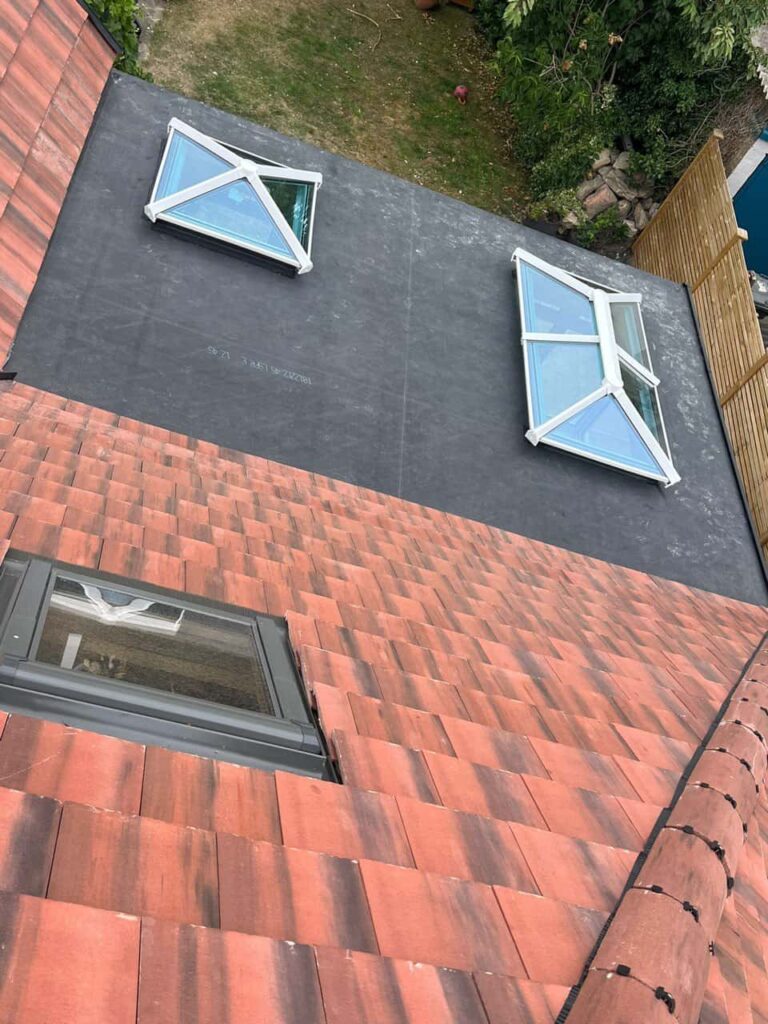
A roofing defect can appear with little warning. A tile may slip, a section of flashing may lift or an internal damp patch may become visible after rainfall. Although the problem might initially seem minor, the roof’s different components work together, meaning one localised fault can affect a much wider area.
A prompt professional assessment helps establish what has happened, whether water is entering the property and what work is required. Early attention can often prevent a manageable defect from developing into more extensive deterioration.
The Importance of Prompt Roof Inspections
Sudden changes should not be judged solely by their appearance from ground level. A small visible defect may expose underlay, battens or adjoining materials to the weather, while a more noticeable issue may still be confined to a repairable area. An inspection provides the information needed to distinguish between the two.
Water Can Enter Through a Small Opening
Rainwater does not require a large gap to penetrate a roof. A displaced tile, cracked slate or narrow split in lead flashing can allow moisture beneath the outer covering.
Once inside, water may travel along the underlay, roof timbers or other components before becoming visible. This means that the internal damp patch may be some distance from the actual entry point.
Prompt assessment is important because continued rainfall can allow moisture to spread into:
- Roof battens and structural timbers
- Insulation within the roof space
- Ceiling materials and internal finishes
- Mortar and adjoining roof coverings
- Previously dry sections of the roof
Identifying the entry point early helps limit how far the problem can progress.
One Loose Component May Affect Those Around It
Tiles and slates are arranged as an overlapping system. If one moves out of position, it may alter the support or weather protection provided to neighbouring materials.
Wind can catch beneath an exposed edge, while repeated movement may loosen surrounding fixings. A defect that begins with one displaced component can therefore become more extensive if it remains exposed to changing weather.
An assessment should examine the surrounding area as well as the obvious damage. This helps confirm whether the issue is isolated or whether nearby materials also require attention.
Hidden Damage May Be Developing
Some of the most important effects of a roof defect are not visible from outside. Underlay may be torn, battens may have weakened or moisture may be collecting within the roof space without immediately marking the ceiling below.
The absence of an internal leak does not always mean the roof is still fully weatherproof. Underlay can sometimes redirect or temporarily hold water, concealing the problem until the material becomes saturated or deteriorates further.
A professional inspection can look for secondary signs such as moisture trails, staining, damaged fixings and changes to the surrounding roof structure.
The Cause May Be More Significant Than the Symptom
Sudden damage is sometimes the visible result of an underlying weakness. A slipped tile could indicate a failed fixing or damaged batten. Cracked mortar may be connected to movement elsewhere, while a leak near a chimney could originate from defective flashing rather than the tiles themselves.
Repairing only the most obvious symptom may leave the actual cause unresolved. A methodical assessment considers how the defect occurred and what must be corrected to reduce the likelihood of it returning.
Changing Weather Can Worsen an Exposed Area
Once part of a roof has been disturbed, further rain and wind can place additional pressure on the vulnerable section. Water may enlarge small weaknesses, and wind may move materials that were previously only slightly loose.
Acting quickly does not mean assuming that extensive work is necessary. It means obtaining an accurate understanding of the roof’s condition before exposure causes avoidable deterioration.
For properties in Marlow, Buckinghamshire, arranging an inspection after noticing a sudden change can help ensure that the correct area receives attention before the next spell of poor weather.
Signs That Should Prompt an Assessment
Professional attention is advisable when you notice:
- A slipped, cracked or missing tile
- New staining on a ceiling or wall
- Water entering the loft
- Loose or displaced flashing
- Mortar fragments around the property
- A visible change in the roofline
- Debris from the roof appearing below
- Repeated dripping during rainfall
- Daylight visible through part of the roof
- A new draught or damp smell in the roof space
These signs vary in severity, but each may indicate that the roof’s protective covering has been compromised.
What a Professional Assessment Should Establish
A useful roof inspection should do more than confirm that a defect exists. It should identify its cause, determine how far the damage extends and assess the condition of adjoining materials.
The findings can then show whether a localised repair is appropriate or whether a wider section requires attention. This targeted approach avoids relying on assumptions and ensures that the proposed work addresses the actual weakness.
A thorough assessment may include the roof covering, fixings, underlay, flashings, valleys, ridges, chimney details and accessible parts of the roof space, depending on where the symptoms appear.
Early Attention Supports a More Effective Repair
Roofing defects are generally easier to address before water and movement affect surrounding components. Prompt action allows weakened materials to be removed, the underlying cause to be corrected and the weatherproof layers to be reinstated properly.
Delaying an inspection may allow a small repair area to expand. It can also make diagnosis more difficult if water begins travelling through several parts of the roof.
Conclusion
Sudden roofing defects should be assessed quickly because even a small opening can allow water to spread, weaken concealed materials and disturb surrounding roof components. The visible problem may also be a symptom of a less obvious fault that requires professional diagnosis.
A timely inspection establishes the cause and extent of the issue so that the repair can be properly targeted. LS Roofing Marlow provides professional roof assessments and repairs in Marlow, Buckinghamshire. If you have noticed a sudden change in your roof, contact the team to arrange an inspection.
Call us on: 01628 562 896
Click here to find out more about LS Roofing Marlow
Click here to complete our contact form and see how we can help with your roofing needs.